How Bernard Huang Went From College Poker Winnings to a Mid-Seven-Figure SEO Company

When you buy something through one of the links on our site, we may earn an affiliate commission.
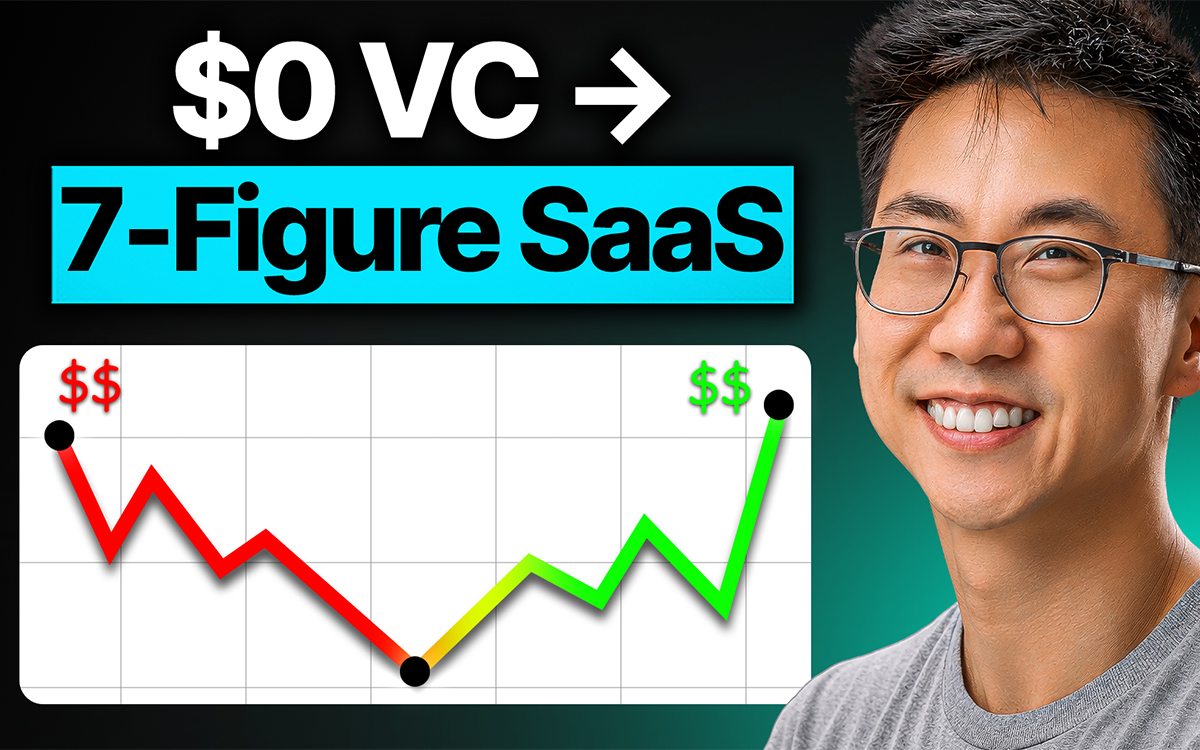
In this week's episode of the Niche Pursuits podcast, Bernard Huang and I discuss how poker, failed ventures, Silicon Valley startups, SEO consulting, and software development shaped his approach to entrepreneurship. He made six figures playing poker in college, ran a restaurant franchise, and spent seven years in Silicon Valley.
Our conversation also covers how he grew Clearscope to mid-seven figures, why customer success became its main marketing channel, and how entity optimization produced traffic gains between 50% and 150%. Bernard also shares concerns about AI, lower production costs, and changing online publishing economics.
Watch the Full Episode
What Poker Taught Bernard About Business Decisions
Bernard's entrepreneurial story began when he watched a high school classmate make more than $100,000 playing online poker. That experience inspired him to study the game, and Bernard went on to make six figures himself while attending college.
Poker taught him to separate the quality of a decision from the outcome of a single hand. A player can make the statistically correct move and still lose, since even a favorable probability leaves room for an unfavorable result.
The same principle applies to business decisions. A marketing campaign may have a reasonable chance of succeeding, yet external factors, timing, or execution can still produce disappointing results. Poker shaped several parts of Bernard's decision-making process:
- Treat uncertainty as a normal condition rather than a reason to freeze.
- Evaluate decisions through probabilities instead of binary judgments.
- Separate personal identity from the performance of a system.
- Improve the process after a loss instead of reacting only to the outcome.
- Make enough disciplined decisions for favorable odds to matter over time.
Bernard explained that struggling players often assume they lack talent. A more useful interpretation is that they may be using a losing system, which can be studied, adjusted, and replaced.
Entrepreneurs can make the same mistake when sales, hiring, or customer acquisition falls short. Viewing the issue as a systems problem creates room for improvement without turning every setback into a judgment of personal ability.
Why the Restaurant Experiment Ended After 13 Months
After college, Bernard invested some of his poker earnings into a Dickey's Barbecue Pit franchise with friends. They sold the restaurant after only 13 months when the economics failed to support the operation.
The experience showed Bernard how difficult physical businesses can be when labor, inventory, preparation, and customer demand must align each day. It also revealed how much management experience he still needed in his early twenties. The restaurant business created several operational challenges:
- Brisket could require around 12 hours of cooking time.
- Preparing too little food meant running out before closing.
- Preparing too much created waste and reduced margins.
- Chicken and other products could lose quality through small preparation errors.
- Employee and manager turnover repeatedly restarted the training process.
Bernard said labor was the largest problem. The restaurant hired young employees, experienced frequent turnover, and struggled to keep general managers from burning out. Age also affected his ability to lead. As a 20- or 21-year-old owner, Bernard found it difficult to recruit and manage experienced professionals who were significantly older than him.
He no longer sees every brick-and-mortar business as a poor opportunity. His conclusion is more specific: owners need enough self-awareness to identify their own weaknesses, define each role clearly, and hire people whose abilities match the operation.
How Seven Years in Silicon Valley Changed His Career
After selling the restaurant, Bernard decided he wanted to work online. He taught himself to code, tried several startup ideas, and eventually moved to Silicon Valley to join 42Floors, a Y Combinator-backed commercial property marketplace.
Bernard spent about seven years in Silicon Valley, from roughly 2013 through 2020. That period exposed him to highly ambitious founders, engineers, investors, and operators working on difficult technical problems.
The location gave him more than startup experience. It placed him within one or two introductions of influential investors, founders, and specialists who could offer advice or open doors. Several features made the environment valuable:
- High expectations felt normal because nearly everyone worked intensely.
- Technical conversations moved quickly due to shared knowledge.
- Capability often mattered more than academic credentials.
- Coffee meetings provided access to experienced operators.
- Professional relationships frequently led to future opportunities.
Bernard described proximity as a powerful force. Spending time around skilled and ambitious people changed his own pace, improved the quality of his conversations, and expanded what he believed he could build.
His Silicon Valley network later helped him transition into SEO consulting. Former colleagues and founders recommended him when other startups needed help, creating an early source of qualified leads.
How SEO Consulting Created the Foundation for Clearscope
At 42Floors, Bernard worked on growth and became deeply involved in SEO. The company ranked for competitive terms related to office space in cities such as San Francisco and New York.
After leaving, Bernard and a business partner initially built an esports coaching marketplace. The platform connected skilled League of Legends players with younger players who wanted lessons, though transaction values were too low to support a large business.
SEO consulting became the more promising opportunity. Referrals through the Y Combinator network brought Bernard and his partner projects from companies with large websites and significant organic search potential. Their client list included:
- DoorDash
- Strava
- AllTrails
- Compass
These companies operated sites with large numbers of landing pages. For businesses of that type, search traffic could account for 50%, 60%, or even 70% of total site traffic during that period.
The agency began winning six-figure consulting contracts. Each project gave Bernard's team access to more data, experiments, and patterns across large websites.
They discovered that SEO performance wasn't driven only by technical checklists, links, and keyword placement. Page quality, user engagement, and topic coverage could also influence how a large set of pages performed.
The Entity Optimization Tests That Increased Traffic
Bernard's agency tested ways to improve directory and landing pages for specific topics. One experiment used natural language processing to identify related entities that appeared across high-ranking search results.
When clients added relevant entities and improved topic coverage, some sites experienced long-tail traffic increases ranging from 50% to 150% within roughly 30 days. The repeated results suggested the process could become a software product rather than remain a consulting method.
Clearscope was created to make that process easier. A user entered a keyword, the software analyzed high-ranking pages, and the editor graded content according to its coverage of relevant terms and entities.
The product stood apart from many SEO tools available at the time because it focused closely on the written page. Much of the industry was still centered on technical optimization, backlinks, keyword use, and publishing at scale. Clearscope helped teams address questions such as:
- Does the article cover the concepts searchers expect?
- Are important entities missing from the draft?
- How does the page compare with current top-ranking results?
- Is the writer addressing the topic comprehensively?
- Could the content provide more useful context?

The product came directly from work Bernard and his partner had already completed for clients. They weren't guessing about a hypothetical need, since they had seen the process produce measurable traffic gains.
Why Customer Success Became Clearscope's Main Growth Channel
Clearscope introduced a category that many SEO professionals hadn't seen before. Bernard often needed to prove that content optimization worked before customers would use the software consistently.
One early customer at Optimizely signed up and then barely used the product. Bernard offered to optimize content for the company himself in exchange for permission to create a case study if the work succeeded.
After the rewritten content was published, the page's traffic increased by more than 100%. Results like that helped establish trust in a product that still required education. Clearscope's growth strategy included:
- Proactive onboarding calls for new customers.
- Webinars explaining how to use the software correctly.
- Direct help with implementation.
- Case studies supported by measurable results.
- Close attention to whether customers succeeded after purchasing.
Bernard viewed customer success as a marketing channel. If clients saw meaningful gains, they often mentioned the tool privately to colleagues and trusted contacts.
That mattered in SEO because many professionals were reluctant to share tactics publicly. A method that produced strong results could become a competitive advantage, so recommendations often moved through private conversations.
Traditional outbound campaigns were less successful. SEO professionals already received frequent messages claiming their sites had technical errors, which made cold outreach difficult to distinguish from spam.
Why Bernard Bootstrapped Clearscope for Nearly 10 Years
Bernard and his partner launched Clearscope around 2016 and bootstrapped the company for nearly 10 years. They chose not to pursue a traditional venture capital path, even though Bernard had relationships inside the startup funding community.
Their goal was to build a profitable software company that generated dependable cash flow. They weren't trying to create a billion-dollar company at any cost. The decision gave the founders more control over:
- Hiring pace
- Product direction
- Pricing
- Spending
- Profit distribution
- Long-term company goals
Bernard had seen venture-backed businesses that raised large sums and then became trapped by growth expectations. Some generated cash, yet couldn't grow quickly enough to reach the next funding milestone or create the return investors expected.
Clearscope eventually grew to mid-seven figures in revenue at its peak. That result supported Bernard's view that a software company could become highly profitable without following a unicorn-or-failure model.
He also acknowledged what the company may have missed. The right investors could have provided mentorship, hiring guidance, portfolio introductions, and assistance during periods of slower growth.
The tradeoff wasn't simply money versus no money. It involved deciding what kind of company the founders wanted to operate and which obligations they were willing to accept.
How AI Is Changing the Economics of Online Publishing
Bernard believes the economics that supported online publishing are breaking down. For years, creators invested time and money into useful content, then received search traffic, subscribers, advertising revenue, or customers in return.
AI-generated answers can now give users information without sending them to the original publisher. This reduces the incentive for small websites to invest in detailed articles when fewer people reach the source.
The same pressure is appearing across social platforms. AI tools can create images and videos at a fraction of the cost of traditional production, allowing automated accounts to publish content at enormous scale.
Bernard has tested these systems himself. Social AI projects he built generated about 20 million views through automated workflows involving video models and scheduled publishing. The cost difference is significant:
- An AI-generated video may cost roughly $0.30 to $2.
- Traditional video production may require hundreds or thousands of dollars.
- Automated systems can publish repeatedly without a full production team.
- AI models can study patterns from previously successful social content.
- Low costs allow creators to test far more concepts.
This creates a difficult competitive environment for human-led productions. A podcast, interview, or professionally filmed video requires planning, equipment, editing, and time, while an automated clip may be created for less than the price of a cup of coffee.
Bernard also noted that social networks have incentives to keep showing AI-generated media when it attracts engagement. The platforms developing or supporting these models may benefit from the added watch time, even as human creators face heavier competition.
Why $200 Per Month Is Becoming a New Software Pricing Anchor
Bernard doesn't claim to have a precise prediction for where AI will lead. He sees the present period as one filled with experimentation, lower creation costs, and weakened barriers between an idea and a finished product.
At the same time, lower barriers mean more competition. Producing a website, game, application, article, or video is easier, so production alone carries less value than it once did. Bernard sees consistency as one remaining advantage. Many people can create something once, while far fewer will continue for three, six, or 12 months.
He also believes entrepreneurs should pay attention to a new pricing anchor. Claude Max and ChatGPT Pro cost roughly $200 per month, and Bernard argues that customers may increasingly compare other software subscriptions with the broad capabilities included at that price.
The value chain may therefore shift from product creation alone toward product creation plus influence. An entrepreneur may release a game, tool, or application for free, use it to attract attention, and monetize a later product once an audience has formed.
Bernard recommends building direct relationships with an audience whenever possible. Newsletters, owned communities, and direct customer connections reduce dependence on search engines or social platforms that can change distribution without warning.
Final Thoughts
Bernard Huang's journey shows how one career can connect poker, restaurant ownership, Silicon Valley startups, SEO consulting, software, and artificial intelligence. Each stage gave him a different way to think about probabilities, people, operations, and market timing.
His story also shows why entrepreneurs should judge systems over isolated outcomes. A failed restaurant, an unprofitable esports marketplace, or an unsuccessful marketing channel can still provide information that leads to a better opportunity.
AI has made the next stage less predictable. Bernard's response is to keep experimenting, build direct audience relationships, and explore products that would have been too expensive or complicated to create only a few years ago.
Links & Resources
- Learn more about Bernard's work
- Check out Clearscope
Related Posts




Want to learn step-by-step how I built my Niche Site Empire up to a full-time income?
Yes! I Love to Learn
Learn How I Built My Niche Site Empire to a Full-time Income
- How to Pick the Right Keywords at the START, and avoid the losers
- How to Scale and Outsource 90% of the Work, Allowing Your Empire to GROW Without You
- How to Build a Site That Gets REAL TRAFFIC FROM GOOGLE (every. single. day.)
- Subscribe to the Niche Pursuits Newsletter delivered with value 3X per week
My top recommendations