When you buy something through one of the links on our site, we may earn an affiliate commission.
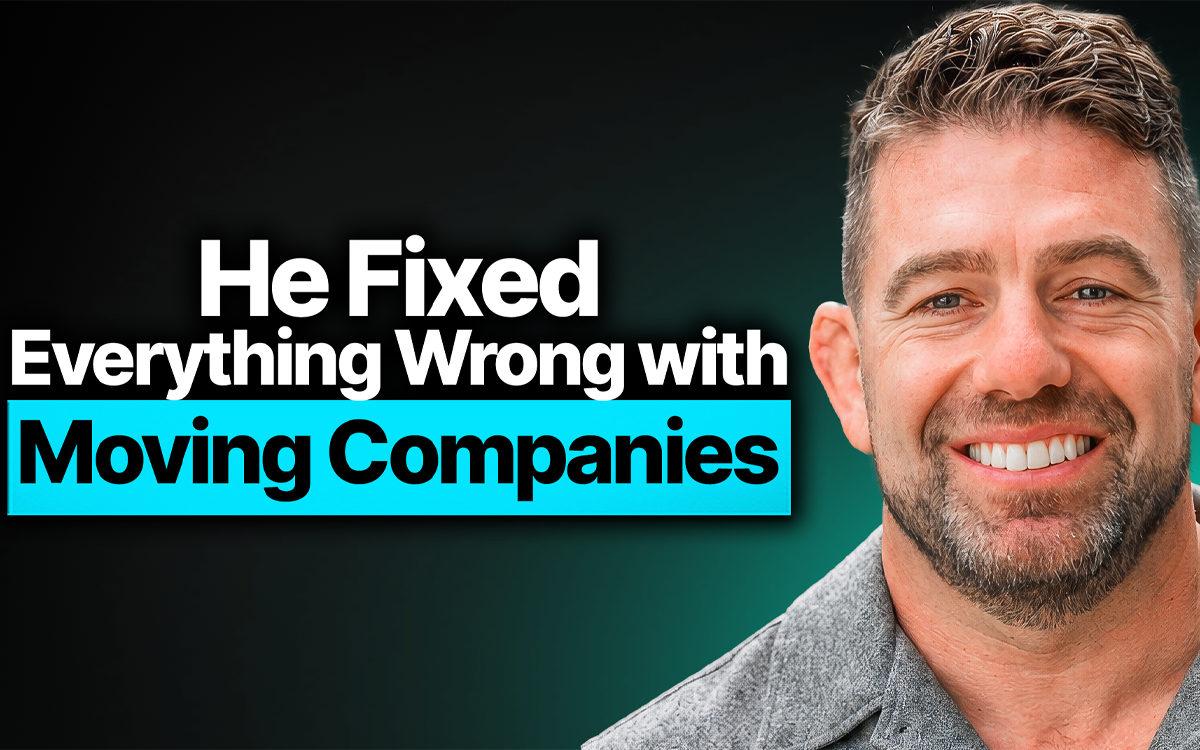
In this week's episode of the Niche Pursuits podcast, Aaron Steed and I discuss how he turned Meathead Movers from a high school side hustle into an eight-figure moving company. He started the business at 17 and has since grown it to nine locations and two mini-storage facilities.
The growth came through years of setbacks, careful expansion, and a distinctive service model built around athletic movers. Aaron faced disconnected phone lines, a licensing hurdle, and failed advertising deals, yet kept pushing forward while protecting the company's reputation and customer experience.
Watch the Full Episode
Starting With a Simple Opportunity
Aaron grew up in San Luis Obispo, California, where wrestling was one of his main priorities. He needed a way to make money that could work around school and athletics, so he began asking friends' parents whether they needed help around the house or with moving.
He was only 17, yet it didn't take long for him to recognize that there was a larger business opportunity. Within roughly his first 10 moves, customers repeatedly told Aaron that his service was the best moving experience they'd ever had.
They also shared stories about movers who failed to show up, damaged belongings, changed prices after loading trucks, or provided little recourse when something went wrong. Aaron's original offer was remarkably simple:
- Customers could decide what the work was worth after the move.
- The team committed to showing up on time and completing the job properly.
- Customers who weren't satisfied could reduce what they paid.
- Aaron extended trust to the customer before asking the customer to trust him.
The concept also paired naturally with Aaron's athletic background. He was captain of his high school wrestling team, while his brother played football. Aaron could recruit fellow athletes who were already accustomed to physical work, discipline, competition, and operating as part of a team.
San Luis Obispo also gave the young company a favorable home base. Aaron described it as a community of roughly 50,000 to 60,000 residents, alongside approximately 30,000 college students from Cal Poly.
Surviving the Crisis That Changed the Company
Within the company's first two or three years, Meathead Movers started attracting attention around San Luis Obispo. Aaron reinvested whatever money he could into the brand. One early marketing tactic involved buying inexpensive magnets and putting them on his car and his friends' cars.
Then established competitors took notice. Aaron says several local moving companies challenged whether Meathead Movers could operate without a professional moving license. His company was primarily supplying labor while customers rented and drove the trucks themselves, yet regulators ultimately sided against him.
In the summer of 2000, the company's phone lines were disconnected. That was an enormous problem in a pre-internet local service market where customers relied heavily on phone books.
Anyone finding Meathead Movers in the directory would call and hear that its number had been disconnected. The stakes extended well beyond Aaron himself:
- Roughly 30 to 40 of his friends relied on Meathead Movers for work.
- Many were using that income to help pay their way through school.
- Aaron was only around 19 or 20 years old.
- He estimated that he needed $25,000 to collateralize the required insurance policy.
- He also needed an accounting system and had to pass California's licensing test.
For Aaron, this became the moment when Meathead Movers stopped being simply a way to earn money while attending school. He decided to prioritize the company even over his college wrestling career.
Finding Customers While Saving $25,000
With the company's phone line gone, Aaron needed another way for customers to reach him while he worked toward the $25,000 he needed.
He approached New Times, a local weekly newspaper, explained what had happened, and asked to advertise with them. Aaron anticipated that regulators might eventually come after those advertisements too, so he warned the publication that the business could need new names and phone numbers.
That's exactly what happened. Aaron cycled through several variations of the business as phone numbers were shut down:
- The Meatheads
- Meathead Loaders and Packers
- Meathead Helpers
- Helpful Meatheads
After three or four iterations, he had saved enough money to move forward with licensing.
Aaron secured the required insurance, established the necessary accounting system, took the test, received his permit, and turned Meathead Movers into a licensed professional moving company. The business could now rent trucks itself instead of operating purely as a labor service.
Financing the First Fleet
Another important financial decision followed roughly a year later. Meathead Movers was spending approximately $8,000 to $9,000 on truck rentals. Aaron calculated that financing its own fleet could save the company around $2,000 every month.
He took that case to Mid-State Bank & Trust. Despite having limited credit and no co-signer, Aaron secured the financing he needed. Meathead Movers purchased a fleet of five new trucks, giving the company another piece of the infrastructure required to compete directly with established moving companies.
The development also represented a dramatic reversal from the phone shutdown. Meathead Movers had gone from fighting to keep customers from hearing a disconnected phone message to operating as a fully licensed company with its own fleet.
Aaron says some of the competitors that had fought to put his company out of business eventually went out of business themselves several years later.
Building a Brand Customers Remember
The Meathead Movers name was never the product of a formal branding exercise. In high school, members of the girls' volleyball team called Aaron and his wrestling friends "meatheads" because they would leave the weight equipment sweaty before freestyle wrestling practice. The nickname eventually became the company's name.
Over the years, Aaron received plenty of advice to change it. He kept it because the name sticks in people's minds. The company then built a service model that makes the athletic positioning visible to customers. Meathead Movers differentiates its crews in several ways:
- Movers are expected to jog whenever they aren't carrying anything.
- Employees complete a 400-point, military-inspired training program.
- Movers are W-2 employees.
- Employees undergo background checks and are expected to remain drug-free.
- Pay can increase when crews avoid damage.
- High customer service scores can also contribute to higher employee compensation.
The jogging policy is especially important because it connects the company's name directly to the service.
Aaron estimates that a move Meathead Movers completes in three or four hours might take a typical company five to seven hours. Since moving services commonly charge based on time, that difference in pace can have a meaningful effect on the customer's experience.
Making Accountability Part of the Service
Aaron also built Meathead Movers around another recurring complaint he heard as a teenager: customers often felt moving companies weren't accountable when things went wrong.
One response was the company's fair refund guarantee. If a customer believes one employee provided only 50% of the expected value, Aaron says Meathead Movers can replace that employee and offer a 50% refund on what the customer paid for that worker's time.
The company backs its service in several other ways:
- Property damage to the home can be covered up to the value of the contract.
- Full-value protection is available at different levels reaching as high as $100,000.
- The company emphasizes resolving legitimate claims rather than dragging them out.
- Employees have a financial reason to limit breakage and maintain high service ratings.
Aaron contrasted this with a common moving-industry valuation of $0.60 per pound for damaged belongings. Under that formula, a 50-pound television that gets destroyed could result in only $30 of compensation. That comparison helps explain why accountability has become such a prominent part of the Meathead Movers positioning.
Expanding Without Growing Too Quickly
Meathead Movers has been operating for 29 years and now has nine moving locations, yet Aaron doesn't view the company as having grown particularly quickly. That's intentional.
He has seen periods when limited capital, lawsuits, market conditions, or internal capacity made expansion a poor decision. Aaron's preference is to wait rather than put employees into roles they aren't prepared to handle or place unnecessary strain on the company's finances.
The first expansion came in 2005. Meathead Movers opened an office in Santa Maria, only around 30 miles from its San Luis Obispo base. The short distance meant the original operation could step in if the new location experienced logistical problems.

The company spent approximately two years working through the issues associated with operating a second location. In 2007, it made a much bigger move into Camarillo, approximately two to two-and-a-half hours away. The location allowed Meathead Movers to serve Ventura County and parts of northern Los Angeles County.
Recovering From a Major Expansion Setback
The Camarillo expansion was supposed to receive a major marketing push through AT&T Yellow Pages. Aaron negotiated an agreement for full-page advertisements throughout Ventura County and northern Los Angeles County. He then signed a lease for a 7,000-square-foot building and began moving six employees into the market.
About a month before the phone books went to print, Aaron says AT&T told him it wouldn't honor the agreement. The phone books arrived without Meathead Movers.
This was still 2007, when many customers searching for an in-home service provider relied heavily on the Yellow Pages. Aaron had committed significant money and personnel to a new market without the customer acquisition channel on which he'd planned.
The team responded with an aggressive local campaign:
- Movers wore box-shaped costumes that Aaron compared to SpongeBob SquarePants.
- Employees handed out flyers near freeway exits.
- The team knocked on virtually every accessible door in Ventura County.
- Door hangers were left at homes when nobody answered.
- Employees attended community festivals and chamber events.
- Meathead Movers showed up at ribbon cuttings and other local gatherings.
It was demanding work. Aaron even remembers Slurpees being thrown at team members while they were promoting the business.
Redirecting Tens of Thousands Into Digital Marketing
There was one advantage to losing the Yellow Pages agreement: Meathead Movers could redirect the advertising budget. Aaron says the planned Yellow Pages spend was in the tens of thousands of dollars, even after the discount he'd negotiated. The company invested that money into its website instead.
Aaron also moved to Ventura County for roughly a year so he could personally focus on the new operation. It wasn't a quick or comfortable expansion, yet it worked.
The community began recognizing the company, word spread, and the new location gained traction. Aaron credits that period as one of the developments that helped propel Meathead Movers into an eight-figure business.
Future expansions became easier as the company gained access to more scalable marketing channels. SEO, Google Ads, an established reputation, and the company's growing brand presence meant each new market didn't have to repeat the same door-to-door campaign.
Making Community Service Part of the Mission
One of Meathead Movers' most distinctive programs has little to do with generating immediate revenue. Since its early days, the company has provided free moving services to people leaving abusive relationships.
When Meathead Movers enters a new community, the company contacts local women's shelters and offers its services. The shelter helps confirm the situation and establish appropriate safety protocols.
The program has become part of the company's mission rather than an occasional charitable project. For employees, it also gives moving work another purpose:
- Crews can help someone relocate into transitional housing or another safe residence.
- Local shelters gain access to professional moving help without passing the cost to victims.
- The initiative accompanies Meathead Movers into each new community.
- Employees can directly participate rather than simply watching the company make a financial donation.
Aaron describes the work as helping people get a fresh start after domestic violence. It's also an example of how Meathead Movers has created an identity that goes well beyond its athletic name.
Creating Customer Experiences Worth Sharing
Today, Meathead Movers relies much more heavily on digital marketing. The company uses SEO, Google Ads, local landing pages, and expanded FAQ content. Aaron says the company is also adding information to its site to become more referenceable by AI systems.
At the same time, some of the company's most interesting marketing efforts happen offline. One initiative is called a "Meathead Moment."
Salespeople have a budget they can use to surprise customers with something personal. When the company discovered that one customer collected Dr Pepper memorabilia, the team brought over a six-pack of Dr Pepper.
It cost roughly $4. That small purchase became memorable precisely because it wasn't something the customer expected from a moving company.
Other customer experience tactics include:
- Providing a VIP chair with a cup holder while the truck is unloaded.
- Giving personalized items to customers going through major transitions.
- Leaving branded coasters behind after the move.
- Sending customers referral links they can share by text.
- Paying a small referral incentive when someone sends new business.
- Parking unused trucks in visible locations where they serve as mobile billboards.
Aaron says most referrals for in-home service businesses occur within roughly two weeks of the service. That makes the period immediately following a successful move particularly important for staying visible and encouraging recommendations.
Responding Faster to New Leads
When asked what's working particularly well for Meathead Movers in 2026, Aaron immediately pointed to speed to lead. He believes customers have become much less patient. The company's own numbers illustrate the difference.
Meathead Movers closes around 50% of prospects it successfully reaches. The close rate for prospects the company can't connect with falls into the low 20% range, creating a gap approaching 30 percentage points.
That has led Meathead Movers to rethink how quickly its sales operation reacts. Recent changes include:
- Extending call-center hours from 6:00 PM until 9:00 PM.
- Reducing the amount of information required to initiate an inquiry.
- Assigning an entry-level office employee to acknowledge inquiries when salespeople are busy.
- Trying to make initial contact within seconds.
- Following an unanswered call with an immediate text.
- Calling the prospect a second time after the text.
Aaron refers to that last approach as a "double tap." Many customers don't answer the first time because they don't recognize the phone number.
Once they receive a text identifying Meathead Movers, they know who's behind the second call and have a reason to answer. For Aaron, that responsiveness has become one of the most significant marketing opportunities across all nine locations.
Creating a Path From Mover to Owner
Meathead Movers is also changing how its individual locations are structured. The company currently operates nine moving locations alongside two mini-storage facilities, with plans to add more storage capacity.
Branch general managers now receive profit sharing during their first few years. After several years, they can use those accumulated profits to purchase an ownership interest of up to 40% in their respective branch. That creates a career path Aaron is particularly excited about:
- Someone can enter Meathead Movers as a mover.
- They can progress into leadership and management.
- A general manager can participate in branch profits.
- Those profits can eventually fund an ownership stake of up to 40%.
Aaron sees the model as a way for employees who may not come from wealthy families to gain access to business ownership. It also keeps ownership closer to the employees and customers at each location.
Meathead Movers plans to use this structure as it continues expanding across the West Coast. Aaron's current target is to open two new offices per year for the foreseeable future.
Final Thoughts
Aaron's story shows what long-term entrepreneurship can look like when growth comes through persistence rather than one dramatic breakthrough. Meathead Movers survived disconnected phone lines, a $25,000 licensing hurdle, a failed Yellow Pages agreement, and a risky 7,000-square-foot expansion before eventually becoming an eight-figure company.
Along the way, Aaron turned an athletic identity into a service model supported by a 400-point training program and a network that now spans nine locations. Nearly 29 years after its launch, the company is still finding ways to improve the same basic promise Aaron made as a teenager: work hard and treat customers well.
Links & Resources
- Book Meathead Movers
- Connect with Meathead Movers on Instagram
- Follow Meathead Movers on Facebook
- Learn more about the Meathead Movers New Vista Office
Related Posts






Want to learn step-by-step how I built my Niche Site Empire up to a full-time income?
Yes! I Love to Learn
Learn How I Built My Niche Site Empire to a Full-time Income
- How to Pick the Right Keywords at the START, and avoid the losers
- How to Scale and Outsource 90% of the Work, Allowing Your Empire to GROW Without You
- How to Build a Site That Gets REAL TRAFFIC FROM GOOGLE (every. single. day.)
- Subscribe to the Niche Pursuits Newsletter delivered with value 3X per week
My top recommendations