When you buy something through one of the links on our site, we may earn an affiliate commission.
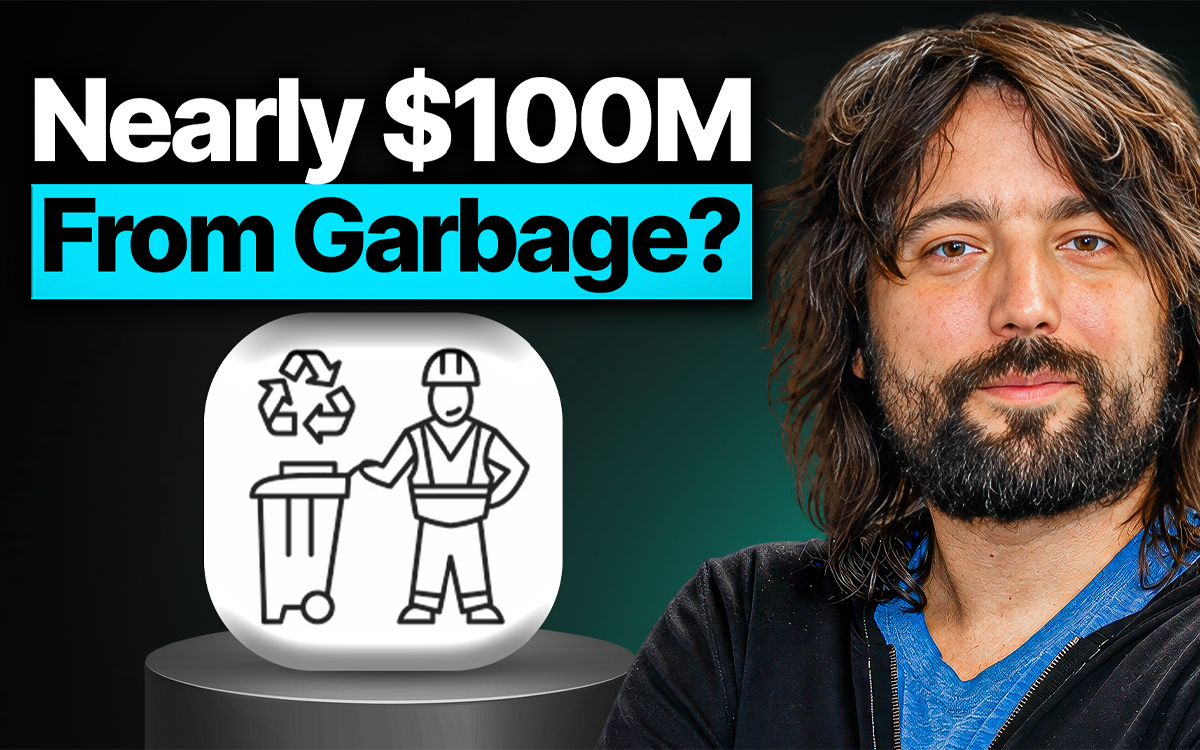
In this week's episode of the Niche Pursuits podcast, Tom Szaky and I discuss how he grew TerraCycle from a college dorm room idea into a global company with nearly 500 employees and just under $100 million in annual revenue. We explore creating businesses around overlooked problems and finding opportunity where few others are looking.
Tom also shares how TerraCycle has earned roughly 250,000 media mentions worldwide over the years, why earned media became a major growth driver, and what led to launching Loop as an adjacent business. His story offers fresh ideas for entrepreneurs looking to build, market, and expand businesses with long-term potential.
Watch the Full Episode
See Opportunity Where Other People See Problems
TerraCycle began nearly 25 years ago while Tom was a freshman at Princeton University. Before that, he had already started a website business at age 14, complete with an employee and five-figure revenue. Once he arrived at college, he became interested in building companies that could produce profits while solving larger problems. That idea eventually led him toward waste.
A simple observation changed everything. Garbage is one of the only materials people are willing to pay someone else to take away. That raised a simple question. If waste has value to the company collecting it, could someone build a profitable business around materials everyone else ignored?
A conversation with friends experimenting with worm composting sparked the original TerraCycle idea. Tom began collecting organic waste, feeding it to worms, and selling worm castings as fertilizer in reused soda bottles.
It was a small beginning that introduced a much larger opportunity. Some early takeaways from Tom's story include:
- Previous business experience gave him confidence long before TerraCycle existed.
- The first version of the company looked very different from today's business.
- Curiosity about overlooked industries created an opening with little direct competition.
- A simple observation about waste became the foundation for an entirely new company.
Build a Business Around an Economic Problem
Many entrepreneurs assume that difficult industries simply need better technology. Tom learned something different. As TerraCycle expanded beyond fertilizer, the company studied why certain products could be recycled while most others could not. The answer was surprisingly simple. It wasn't a technical problem. It was an economic one.
Traditional recycling companies recycle only materials that generate more revenue than they cost to collect and process. That explains why aluminum cans, cardboard, and certain plastics are commonly recycled while products such as coffee capsules, cigarette butts, toothbrushes, and cosmetic packaging usually are not.
According to Tom, roughly 95% of consumer products aren't economically viable to recycle through traditional systems. That insight became the foundation for TerraCycle's business model. Rather than asking how to recycle difficult materials, TerraCycle asked who would benefit enough to pay for the recycling process. Potential funding partners included:
- Product manufacturers
- Retailers
- Consumers
- Businesses generating the waste
Instead of depending on the recycled material itself to create profit, TerraCycle charges stakeholders for the collection and processing required to solve a waste problem. That simple shift allowed the company to create entirely new recycling categories. Today, TerraCycle has become the global leader in recycling products including:
- Coffee capsules
- Cigarette butts
- Cosmetic packaging
- Laboratory waste
Create Demand Instead of Waiting for It
One of the most valuable parts of the conversation centered on creating markets that don't yet exist. Many entrepreneurs search for products customers already want. Tom approached the problem differently. He looked for needs that lacked a workable business model.
That required more than identifying a problem. It required giving companies a compelling business reason to participate. For example, telling a manufacturer that its packaging ends up in landfills may get someone's attention. Showing that a recycling initiative can increase customer acquisition, improve retention, strengthen brand reputation, or increase store traffic creates a much more persuasive conversation.
Tom explained that companies are motivated by business outcomes. The environmental impact opens the conversation. The commercial value closes the deal. That distinction became one of TerraCycle's biggest competitive advantages. When thinking about opportunities like this, consider questions such as:
- Who benefits financially if this problem gets solved?
- Which stakeholder has the greatest incentive to pay?
- How can solving the problem improve revenue, customer loyalty, or risk reduction?
- Can one solution create value for multiple parties at the same time?
This way of thinking applies to far more than recycling. Many successful businesses exist because they found the economic incentive hidden behind an unmet need.
Build Marketing Around Stories People Want to Share
Marketing is another area where TerraCycle stands apart. Most companies spend heavily on advertising. Tom focused on making the business itself interesting enough that other people would tell its story. The results have been remarkable.
TerraCycle gets roughly 50 stories every day. The company has appeared in approximately 250,000 media articles globally, including around 150,000 in the United States alone. Instead of relying only on paid advertising, the company built what Tom calls "negative cost marketing."
The idea is simple. Rather than paying to become the advertisement, create stories valuable enough that publishers, television networks, event organizers, and business partners want to feature them. TerraCycle's marketing strategy includes:
- Partner promotions through global brands like Procter & Gamble, Nestlé, Walmart, and Target.
- Product packaging featuring the TerraCycle brand.
- Television appearances and documentary programming.
- Books authored by Tom that also expand company awareness.
- Speaking engagements that both generate revenue and introduce new audiences to the business.
One lesson stood out during this discussion. Journalists are under pressure to publish more content with fewer resources. Companies that make reporting easier often receive far more coverage. Tom recommends helping journalists by:
- Providing photos.
- Offering interviews quickly.
- Supplying background information.
- Giving them a complete story instead of expecting them to build one from scratch.
That philosophy has helped TerraCycle create one of the most successful earned media programs in its industry.
Expand Your Business Without Losing Focus
TerraCycle spent years building relationships with many of the world's largest brands and retailers. Those partnerships eventually created another opportunity. Instead of asking how to recycle more products, Tom and his team asked a bigger question.
Was recycling solving the problem at its source? That led to the creation of Loop. Launched after years of planning, Loop focuses on reuse instead of recycling. Rather than creating another standalone company, Tom built it as an extension of TerraCycle's existing strengths and relationships.
The concept is straightforward. Consumers purchase products in durable, reusable packaging and pay a small deposit. Once the product is empty, they return the packaging, receive their deposit back, and TerraCycle handles cleaning and returning the container to manufacturers for another use.
Today, more than 200 global consumer brands participate in Loop, and shoppers in France can purchase more than 400 reusable products through the platform. Examples include products from companies such as:
- Kraft Heinz
- Pantene
- Nutella
- Coca-Cola

Tom explained that this expansion succeeded because it built on assets TerraCycle had already spent years developing. Instead of convincing hundreds of new companies from scratch, the relationships already existed. That dramatically shortened the path from idea to execution.
Expand Into Adjacent Markets at the Right Time
Many entrepreneurs eventually discover opportunities outside their original business. The challenge is deciding whether to pursue them. Tom believes timing matters just as much as the idea itself.
By the time Loop launched, TerraCycle had already worked with major manufacturers and retailers for well over a decade. Those relationships became one of the company's greatest competitive advantages because partners already trusted the business.
He also pointed out another reason the expansion made sense. Loop didn't replace TerraCycle. It expanded the company's role within the same supply chain.
Tom compared the strategy to Netflix moving from DVD rentals to streaming. The company disrupted its own business before someone else had the chance. For business owners thinking about expansion, his approach offers several useful questions:
- Can your current customer relationships support the new idea?
- Does the expansion increase your role within your industry?
- Will the new business strengthen your existing business instead of distracting from it?
- Are you building on an existing advantage rather than creating one from scratch?
Those questions helped TerraCycle move into reuse while continuing to grow its recycling business.
Measure Marketing Beyond Traffic
Earned media has a reputation for being difficult to measure. Tom acknowledged that challenge.
He also shared several ways TerraCycle evaluates whether its marketing efforts produce business results.
The company looks at more than article counts. Instead, it examines whether media coverage contributes to measurable business outcomes. Some of the metrics TerraCycle tracks include:
- Advertising value equivalents for partner campaigns.
- Increases in direct sales following major media coverage.
- Performance after reducing paid advertising.
- Search visibility across traditional Google results.
- Visibility within AI-generated search summaries.
One example stood out. When TerraCycle searches for terms like "cigarette recycling," the company dominates both traditional search results and AI summaries without paying for those placements. That visibility comes from years of earned media rather than advertising spend.
For content creators and website owners, the lesson extends far beyond recycling. Building authority often produces results that paid campaigns cannot easily replicate.
Raise Capital Only When It Creates Opportunity
Tom didn't build TerraCycle as a bootstrapped company. He openly discussed both the benefits and tradeoffs of outside investment. Looking back, one lesson stands above the rest. He wishes he had raised less money during the earliest years.
Early funding typically requires giving up a much larger ownership stake because the company's valuation remains relatively small. As businesses mature, raising larger amounts of capital often requires less dilution.
TerraCycle followed a traditional venture funding path during its first decade before becoming profitable. According to Tom, the company has remained profitable for more than ten years and now raises capital primarily to fund growth rather than cover operating losses.
That distinction shapes every investment decision. Instead of filling financial gaps, new capital supports acquisitions, expansion, and product development. Current priorities include:
- Acquiring complementary recycling businesses.
- Expanding sales into additional industries.
- Developing new recycling programs.
- Investing in adjacent opportunities.
One recent acquisition involved a Connecticut-based light bulb recycling company. Rather than operating independently, that business immediately gained access to TerraCycle's broader portfolio of recycling services, allowing it to offer much more to existing customers.
Focus on Incentives Instead of Intentions
Tom encourages entrepreneurs to focus less on what organizations say they care about and more on what motivates their decisions. His analogy involved chess pieces. Every business has predictable ways it moves. Consumer brands want more customers, stronger retention, lower costs, and larger market share.
When TerraCycle presents new recycling programs, the conversation centers on helping companies achieve those business goals. Environmental impact remains an important benefit. It simply isn't the first language many companies use when making investment decisions.
That shift in perspective helped TerraCycle build partnerships with many of the world's largest brands. When presenting your own products or services, ask yourself:
- What motivates your customer every day?
- Which business problem creates the greatest urgency?
- How does your solution contribute to measurable business growth?
- Can your pitch connect with those priorities first?
Small changes in positioning often make a much bigger difference than changes to the product itself.
Learn From Failure Instead of Avoiding It
Tom closed the conversation with another lesson that applies to every entrepreneur. Failure is expensive. It's also one of the best teachers available. Instead of becoming frustrated after setbacks, he recommends treating each failed project as tuition.
If a company spends thousands of dollars and hundreds of hours pursuing an idea that doesn't work, the investment still has value if the lessons prevent bigger mistakes later. That mindset creates continuous improvement instead of repeated mistakes.
Final Thoughts
Tom Szaky's story is far more than the story of a recycling company. It's the story of finding opportunity where few people are paying attention, creating demand instead of waiting for it, and building systems that continue growing long after the original idea has evolved.
From launching TerraCycle in a college dorm room to leading a global company with nearly 500 employees and close to $100 million in annual revenue, Tom has consistently looked for overlooked problems that carry meaningful business potential.
His experience also reinforces a lesson that applies across every industry. Great businesses aren't always built by entering crowded markets. Sometimes the biggest opportunities come from solving problems that everyone else has accepted as unsolvable.
Links & Resources
- Learn more about TerraCycle.
- Invest in TerraCycle.
Related Posts





Want to learn step-by-step how I built my Niche Site Empire up to a full-time income?
Yes! I Love to Learn
Learn How I Built My Niche Site Empire to a Full-time Income
- How to Pick the Right Keywords at the START, and avoid the losers
- How to Scale and Outsource 90% of the Work, Allowing Your Empire to GROW Without You
- How to Build a Site That Gets REAL TRAFFIC FROM GOOGLE (every. single. day.)
- Subscribe to the Niche Pursuits Newsletter delivered with value 3X per week
My top recommendations