How Nick Gray Turned a Hobby Into a Multi-Million Dollar Exit and Launched a Personal Website Business

When you buy something through one of the links on our site, we may earn an affiliate commission.
In this week’s Niche Pursuits podcast, Nick Gray and I discuss turning personal passions into sellable businesses, the trust-building power of books, and the modern role of personal websites in SEO and reputation. This atypical interview challenges standard marketing ideas and explores unconventional paths to authority.
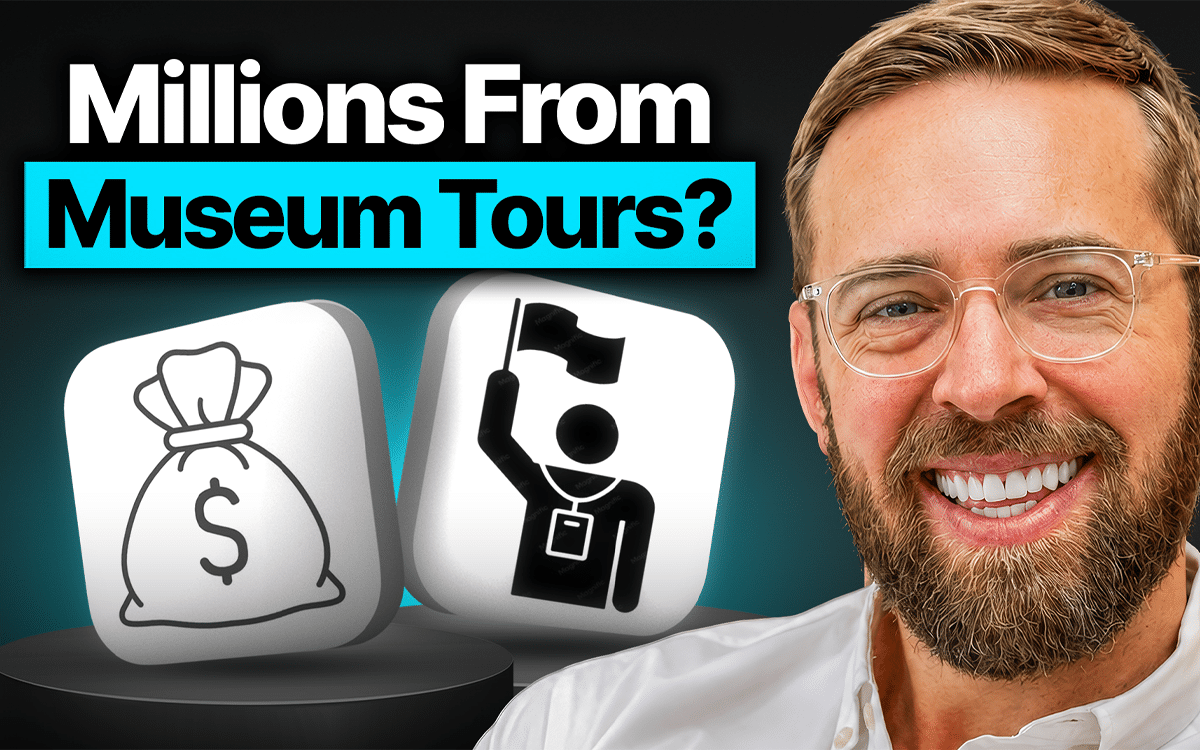
The first half followed a familiar path: Nick shared how he built Museum Hack from casual museum tours for friends into a company that sold for millions. The second half turned into a back-and-forth conversation about personal websites, authority, entity clarity, and what business owners may be missing when they focus only on their company site.
Watch the Full Episode
How a Hobby Became Museum Hack
Nick Gray didn't set out to become a museum entrepreneur. He moved to New York City, started visiting the Metropolitan Museum of Art, and began showing friends around for fun.
The Met gave him plenty of material to work with:
- 2.7 million square feet of space
- Roughly 50 acres inside Central Park
- Enough scale to feel overwhelming to casual visitors
- A reputation that could intimidate people who did not see themselves as “museum people”
Nick wasn't trained in art history. He had never been a tour guide. That became part of the advantage. Instead of designing tours for art lovers, he built tours for people who thought museums were boring. He focused on stories, gossip, money, romance, rivalry, and the strange details that traditional tours often skip.
How Charging Changed the Product
At first, Nick gave tours to friends. Then, friends referred other friends. A blog wrote about his tours, calling them one of the best things to do in New York City, and more than 1,000 people wanted to join.
That demand forced a hard decision: charge money or keep treating it like a hobby. Nick started small, somewhere around $19 or $29 per person. On the first paid tour, he gave everyone their money back because he enjoyed the experience so much.
Charging still proved to be one of the best business decisions he made. Once people paid, they treated the experience with more respect. A few pricing details stood out:
- Museum Hack tours later sold for $79 to $99 per person.
- The company targeted people willing to pay for experiences, such as concerts, Broadway shows, sports, and other city activities.
- A standard museum tour might cover 5 or 6 pieces per hour.
- Museum Hack tours covered around 15 pieces per hour.
- The pace, humor, and storytelling made the product feel different from the start.
That positioning mattered. Nick wasn't selling access to the museum. He was selling a more entertaining way to experience it.
The Business That Scaled Beyond Nick
One of the hardest parts of any personality-driven business is getting the founder out of the delivery role. Nick faced that problem early.
A friend told him the business could never scale because Nick was the product. Instead of accepting that, Nick hired people who could carry the experience's energy. His hiring strategy was unusual:
- Stand-up comedians
- Broadway actors
- Freelancers are used to flexible work
- People might want to grab a drink after the tour
That decision helped Museum Hack grow beyond one guide and one city. The first expansion was Washington, DC, partly because it was close enough to New York to manage.
The cities that worked best had two traits: large visitor demand and a deep freelance labor pool. New York, Los Angeles, and San Francisco all had people with side gigs, performance backgrounds, and flexible schedules.
How Museum Hack Worked With Museums
Museum Hack started as a renegade tour company, which meant the museums didn't sanction it. That created tension. Museums sometimes tried to shut the company down. Nick and his team had to work around rules, deal with uncertainty, and find ways to keep tours running.
Eventually, the relationship became more cooperative. If Museum Hack sold a $79 tour, it would cover the full museum admission price for each guest, which is typically around $25. That made the value clearer:
- Museums received ticket revenue
- Visitors came who might not have visited otherwise
- Museum Hack handled the guest experience
- The tour company kept control of its distinct style
It was not a friction-free model. Yet the arrangement showed how a company can shift from an outsider to a revenue partner when incentives are aligned.
Nick's Eventual Exit
Nick never expected to sell Museum Hack. It was labor-heavy, unusual, and not the kind of clean software business many buyers chase.
The company grew into multiple cities and reached many millions in revenue. Nick said he worked hard to turn it into a $5 million to $10 million company, yet he could not break through the $3 million in annual sales.
By then, he had worked himself out of daily operations. His leadership team was running the company and eventually approached him with an offer to buy it.
The deal used full seller financing, which isn't common. In Nick’s case, the buyers put down zero dollars and paid him from the company's profits over time. That structure worked because of trust:
- The buyers were already running the business
- They knew the numbers
- They had a deep company context
- Nick believed they were committed to keeping growing it
He sold the business in 2019. Then COVID hit, museums shut down, and the company’s revenue went to zero.
The new owners pivoted into remote team-building experiences. Nick described that painful restart as a blessing because it pushed the business toward better margins and a more profitable model.
A Book Built a Different Kind of Asset
After selling Museum Hack in 2019, Nick launched The 2-Hour Cocktail Party in 2022. He had wanted to write a book for branding reasons, yet he wanted it to be more than a thought-leadership project.
He wanted a tactical, workbook-style guide for hosting small gatherings. His specialty was events for 15 to 25 people, and the book gave him a way to teach that formula at scale.
The financial side was less attractive. Nick spent about $60,000 on top-level design, layout, and publishing support. A few book details stood out:
- It took about five years to write and release
- It was self-published
- Nick wrote it with support from a team of writers
- The design and layout were major investments
- The direct financial ROI was not the main reward
The book built trust in a way reminiscent of podcasting. When someone spends hours with your ideas, they form a deeper connection than they might from a short post or social update.
LLMs Changed the Book Question
Nick also discussed whether business nonfiction books still hold the same value in the age of LLMs. That question matters for entrepreneurs who are thinking about writing one.
A book can still build authority, create connection, and give people a structured way to spend time with your ideas. The harder question is whether a book is the best format today. Other formats may compete for attention:
- Blog series
- Online courses
- Short videos
- Podcasts
- Email newsletters
- AI-assisted learning paths
Nick said he was happy he wrote his book when he did. He was less certain he would choose the same route today if he were comparing it to newer formats.
Personal Websites Became the Next Business
Nick’s newest project is PersonalWebsites.org, a service that builds and manages personal websites. His basic offer is around $29 per month.
This passion comes from his own experience. Nick has had a personal website for 25 to 26 years, and he credits it with helping him meet people, create relationships, and shape how he appears online.
The argument is simple: people Google names. They also ask AI tools about people, companies, founders, service providers, and potential partners. A personal website gives someone a place to tell that story directly. Use cases include:
- Business owners who want a profile beyond the company site
- Professionals who want to own their name online
- Parents who want a basic public presence
- Founders who may sell a company someday
- Buyers reaching out to business owners
- Speakers, authors, consultants, and operators
Nick stressed that this isn't about burying negative search results. It's proactive reputation work, focused on giving people a credible source about who they are.
How Jared’s Website Became Part of the Interview
The interview took an unexpected turn when Nick pulled up JaredBauman.com and gave a kind live critique. That shifted the conversation from a standard interview into something closer to the old Niche Pursuits news episodes.
Nick liked that Jared’s site included strong photos, a speaker highlight reel, endorsements, testimonials, and authority signals. He also suggested breaking the site into more pages. His main suggestion was to create more “surface area” around the person:
- A separate about page
- A contact page
- A photo page
- Dedicated pages for speaking or media
- More indexable pages tied to the name
The point wasn't to turn a personal site into a second company site. It was to provide search engines and AI systems with more structured signals about the person, their work, and their relationships with other entities.
Nick's Take on How Personal Websites Support SEO and GEO
The conversation moved into SEO, GEO, AEO, and the role personal websites can play in helping machines distinguish between people and brands. In this context, Jared Bauman, as a person, is one entity, while 201 Creative, as a business, is another.
That separation matters when founders and companies are closely tied together. Many local businesses blur the line between the owner and the company, making it harder for Google and AI systems to tell who is who. A personal site can help clarify:
- The person’s career history
- The person’s current company
- Past ventures
- Podcast appearances
- Speaking experience
- Associations, education, and public work
- Links between the person and the business
Nick shared that his team migrated about 80 personal websites from WordPress to a static setup using Payload CMS and Astro. Their PageSpeed Insights scores increased from around 87-88 to around 99.
That technical improvement matters because personal websites are often simple. They can be quick, static, clean, and easy for search engines to process.
Nick’s New Business Is Growing
Nick described PersonalWebsites.org as being about a year into the business. He compared it to Museum Hack in its early phase, when he spent years experimenting before treating it as a larger company.
At the time of the interview, he had around 80 clients and was doing roughly $3,000 to $4,000 per month. The business is still finding its sharper market focus. Possible customer groups include:
- Real estate professionals
- Lawyers
- Doctors
- Business buyers
- Business sellers
- Local business owners
- Professionals with public reputations
Nick wants the service to remain personal while also exploring ways to make it more scalable. That tension mirrors the same issue he faced with Museum Hack: how do you grow something without losing the quality that made it work?
Final Thoughts
This episode started with a highly unusual business story, moved into the value of books, and then turned into a live discussion about personal websites, authority, GEO, and how people show up online.
Nick Gray’s career has a clear thread through all three projects. He takes things that feel overlooked, such as museum tours, small gatherings, and personal websites, then makes them more useful, more fun, and easier to act on.
The biggest takeaway is that personal reputation is becoming a more visible business asset. Whether someone is selling a company, building authority, winning local clients, or trying to ensure AI tools describe them accurately, owning a clear personal website may become much more important than many people think.
Links & Resources
- Connect with Nick
- Learn more about Personal Websites
- See the Internet's biggest database of public donations
- Buy or look inside The 2-Hour Cocktail Party
- Subscribe to Nick's newsletter
Related Posts




Want to learn step-by-step how I built my Niche Site Empire up to a full-time income?
Yes! I Love to Learn
Learn How I Built My Niche Site Empire to a Full-time Income
- How to Pick the Right Keywords at the START, and avoid the losers
- How to Scale and Outsource 90% of the Work, Allowing Your Empire to GROW Without You
- How to Build a Site That Gets REAL TRAFFIC FROM GOOGLE (every. single. day.)
- Subscribe to the Niche Pursuits Newsletter delivered with value 3X per week
My top recommendations