When you buy something through one of the links on our site, we may earn an affiliate commission.
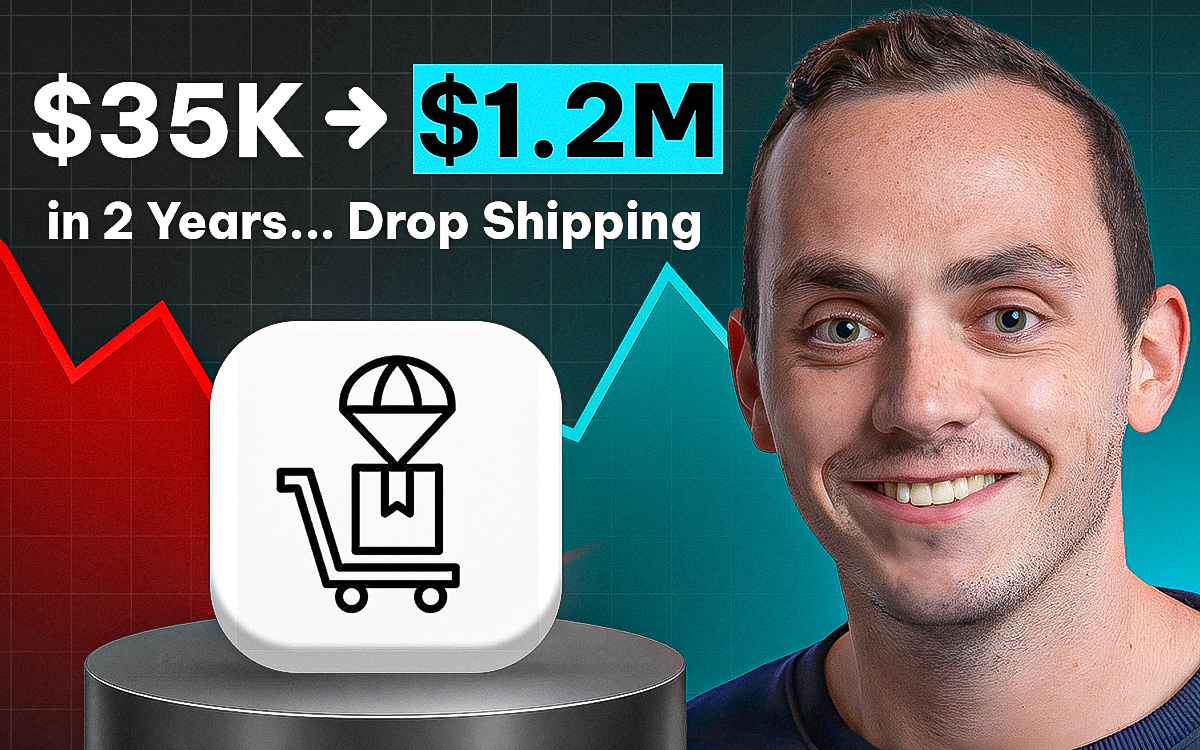
In this week’s episode of the Niche Pursuits podcast, Phil McEleney and I discuss how he grew CamperNation from a side project into a high-ticket dropshipping business generating roughly $1.2 million in trailing 12-month revenue. He built the company while working full-time, gradually transitioned into entrepreneurship, and developed multiple customer acquisition channels.
CamperNation grew from approximately $30,000 to $35,000 in revenue during 2024 to roughly $500,000 in 2025, before crossing the seven-figure mark. With an average order value near $1,500, around 900 customers, and peak organic traffic of 30,000 monthly visits, Phil is now preparing to expand beyond dropshipping into products of his own.
Watch the Full Episode
Building the Business Alongside a Corporate Career
Before CamperNation, Phil spent about a decade working in marketing, largely in corporate environments and with major technology companies. He worked with channels such as Google Ads and Facebook advertising, though his day-to-day responsibilities increasingly shifted toward client management, team management, and problem-solving.
That background gave him familiarity with certain marketing concepts, but it didn't hand him a ready-made e-commerce business. Setting up a website, managing bookkeeping, working with suppliers, handling fulfillment, and running the commercial side of the company required a different skill set.
Phil’s experience is worth noting for anyone who assumes you need years of agency experience before building an online store. Many of the most important tasks had to be learned while CamperNation was taking shape. His transition away from employment was gradual:
- He first built the business while working five days per week.
- He later reduced his job to three days per week.
- He remained on that schedule for roughly nine months.
- CamperNation had been live for about 18 months when he left employment completely.
- He also kept savings available in case the business produced little or no income for a period.
That phased approach gave Phil room to make decisions with a longer time horizon. Rather than pressuring CamperNation to cover every personal expense immediately, he gave the company time to develop before relying on it completely.
Choosing High-Ticket Dropshipping From the Beginning
CamperNation sells caravan and motorhome accessories primarily to customers in the UK. It has operated as a dropshipping business from the start.
In this model, CamperNation sells the product and manages marketing and customer relationships while the manufacturer generally ships the order directly from its own warehouse. Phil’s company does not need to handle most of the products it sells physically.
The high-ticket element changes the economics considerably. With an average order value near $1,500, CamperNation doesn't need thousands of monthly transactions to generate meaningful revenue. That came with several early advantages:
- A small number of sales could cover advertising and operating expenses.
- Phil could manage the first customers while still employed elsewhere.
- Customers usually had meaningful questions before purchasing.
- Those questions created opportunities for CamperNation to differentiate itself through service and useful information.
High-ticket purchases also tend to involve more consideration. A customer spending $1,500 may research brands, specifications, compatibility, sizing, and alternatives before handing over a credit card.
Phil saw that extra consideration as an opportunity. If CamperNation could answer more of those questions before the sale, it had a better chance of winning the order even when competitors carried the same product.
Starting Customer Acquisition With Google Shopping Ads
The first reliable source of sales came from Google Shopping Ads. Phil launched products on the website, connected with suppliers, and began advertising to people searching for specific items.
Shopping ads appealed to him because they allowed CamperNation to reach customers already close to purchasing. Someone searching for the exact name of a caravan accessory is much further along than someone casually researching travel equipment.
Phil later added conventional Google search ads. He approached those campaigns after Shopping Ads gave him more information about which products and queries drove sales. His progression looked something like this:
- Start with Shopping Ads tied closely to specific products.
- Identify products and search terms with purchasing intent.
- Add search ads for proven queries.
- Use both formats to claim more visibility on Google’s results pages.
- Add retargeting and lead capture for people who do not purchase on the first visit.
Phil noted that search ads can carry higher cost-per-click rates than Shopping Ads. Testing the product-focused format first gave him a way to learn where demand was before spending more heavily on broader search campaigns.
Growing Organic Traffic From 10 Visitors a Day to About 1,000
SEO later became one of CamperNation’s main acquisition channels. The growth here has been dramatic. At one point, the site attracted roughly 10 organic visitors per day, or about 300 per month. During a peak summer month, that figure reached around 30,000 organic visits, or about 1,000 visits per day.
Phil credits much of that growth to an approach commonly called Avalanche SEO. The basic idea is to target search terms appropriate to a site's authority and organic traffic, then pursue more competitive terms as that traffic grows.
Early on, Phil focused heavily on lower-volume informational queries. He produced roughly 100 articles related to CamperNation’s main product category, with each article targeting a specific question customers were asking. Individual pages didn't need massive search volume to matter:
- Some queries might bring only 5 to 20 visits per month.
- Publishing many narrowly targeted articles allowed those visits to accumulate.
- Growing traffic gave the site a chance to compete for larger queries later.
- Commercial collection pages eventually began attracting more search traffic as the site gained traction.
The type of traffic has also changed. Early search traffic leaned toward blog content, while a larger portion now reaches collection pages connected more closely to commercial searches.
That progression matters for an e-commerce store with a $1,500 average order value. Even a relatively small conversion rate can translate into significant sales when each purchase is worth four figures.
Adding an Affiliate Channel With Limited Management
CamperNation’s third acquisition channel is its affiliate program. Instead of managing affiliates directly, Phil works with a UK company that handles much of the process.
CamperNation determines the percentage of revenue it is willing to give up on various brands or products. The affiliate management company can then divide that amount between itself and the affiliate sending the customer.
In a good month, Phil said the program can produce around £20,000 in sales. There are several reasons he likes the channel:
- Advertising expense is tied directly to completed sales.
- Well-known niche brands already have review and comparison content.
- Affiliates can naturally place links inside existing content.
- The program requires relatively little of Phil’s time.
Phil isn't currently making affiliate growth one of his main priorities. It works, produces revenue, and requires little attention, so he sees greater opportunities for his time elsewhere.
That decision reflects a theme that comes up repeatedly in the interview. A business owner can find plenty of projects worth pursuing, while only a few may deserve concentrated effort at any given moment.
Turning Product Questions Into a 5,000-Person Email List
Email has become CamperNation’s fourth major acquisition and conversion channel. The company has built a list of around 5,000 people.
One of its most successful lead-generation ideas came directly from Phil’s early customer service work. Customers repeatedly asked what size or power level they needed for a particular product.
Instead of treating those questions solely as support work, Phil turned them into a lead magnet. Customers could enter information about their vehicle, provide an email address and an optional phone number, and get help selecting the right product.
CamperNation also reduced a major purchasing concern by offering favorable return or exchange terms to people who used the sizing service. That single offer has produced notable results:
- More than 2,000 people have signed up through the lead magnet.
- Phil attributed roughly £250,000 in revenue to that list.
- New subscribers enter a product-specific welcome sequence.
- The initial sequence lasts about two weeks and contains five or six emails.
- The broader newsletter currently goes out two or three times per week.

The first automated message tells the customer that CamperNation received the request and that a person from the company will follow up within 24 hours. Later messages address other common questions connected to the product category.
This approach connects marketing closely with customer service. Instead of creating a lead magnet around an abstract topic, Phil built one around a question people needed answered before they could confidently place an order.
Managing a Business Where 70% of Revenue Arrives in Six Months
CamperNation operates in a heavily seasonal category. Roughly 70% of its revenue comes during six months centered on warmer spring and summer.
That creates a very different operating rhythm than many e-commerce businesses, which see their largest spike in the fourth quarter. For CamperNation, autumn and winter are comparatively quiet. Phil adjusts both spending and operations around that pattern:
- Advertising spend drops during periods when purchase intent is lower.
- The slower months are used to build systems and improve processes.
- The company can add temporary help during the busiest part of the year.
- The company assesses performance over longer periods rather than month by month.
One example is the customer service dashboard the company developed with help from AI tools. Work like that can be handled during the quieter months, leaving the team better prepared for the surge that arrives in spring.
The seasonality also requires a different mindset around growth. Revenue declining during the winter does not necessarily mean the company has stopped progressing.
Building a Small Team Around Operations
Phil no longer handles most day-to-day customer service himself. CamperNation now has a full-time operations manager who manages much of what happens after an order is placed.
Her responsibilities include order fulfillment, supplier communication, delivery coordination, phone calls, email, and live chat. A separate team member covers weekends, and freelancers assist with tasks such as product uploads and website management.
That gives Phil more time to focus on areas tied to growth:
- SEO strategy and execution
- Advertising management
- Product development
- Supplier and manufacturer research
- Larger company initiatives
The shift is significant because Phil learned a great deal by handling customer support personally early on. Those conversations helped him identify buyer concerns, develop the sizing lead magnet, and get a clearer picture of CamperNation’s core customer.
His typical customer is retired, relatively affluent, and willing to spend time researching products before purchasing. Many also appreciate being able to communicate with a person, which influences how CamperNation approaches service.
Using AI to Speed Up Content and Customer Service
AI now appears in several areas of CamperNation’s workflow. Phil uses a combination of tools to produce SEO content at scale while still including human review before publication.
For his SEO process, he described using Gemini to help identify heading structures, SEOWriting.ai for an initial article draft, and Claude for refinement. A person then reviews the content, checks details, and adds a more human touch.
AI also assists elsewhere:
- Customer service templates help the operations team respond faster.
- Phil uses AI while creating email content.
- It assists with spreadsheet-related work.
- Multiple tools can be combined rather than assigning the entire task to a single prompt.
Phil also sees a potential advantage in maintaining human contact as AI-generated material becomes more common. His customer base often wants to communicate with a person, so a company that remains accessible may stand apart from businesses that automate every interaction.
For search, Phil expects signals beyond on-page content to carry growing importance. He specifically pointed to backlinks and third-party reviews as ways search engines and AI systems may identify reputable sources when producing acceptable written content becomes easier for nearly any website.
Moving From Dropshipping Toward Owned Products
Phil doesn't see dropshipping as the final stage of the company. He views it as a useful entry point that can lead into products with greater ownership and higher potential margins.
CamperNation has already taken an intermediate step. The company purchased inventory of some best-selling items and began using a third-party logistics provider for warehousing and fulfillment.
That experience gives the team exposure to inventory management without moving immediately from pure dropshipping into a large private-label commitment. Phil’s approach to future products includes:
- Studying the company’s current best sellers.
- Reviewing customer feedback and feature requests.
- Looking for gaps in existing products.
- Finding manufacturers that can produce CamperNation’s versions.
- Testing with relatively small inventory commitments before placing larger orders.
The target is to have the first set of owned products entering the market around spring 2027. That timing aligns with the start of CamperNation’s main selling season.
Focusing the Next 12 Months on Three Areas
After roughly one year as a full-time business owner, Phil has a fairly clear set of priorities for the next stage of CamperNation.
The first is product development. Moving toward owned products could give CamperNation more control over what it sells while building on years of customer feedback and sales data.
The second is continued investment in SEO. The site has reached a point where it can pursue larger commercial keywords that were unrealistic when it was attracting only a few hundred organic visits per month.
The third is another hire:
- Phil is considering bringing in someone focused on sales.
- The role would be separate from current customer service and fulfillment responsibilities.
- More sales support could give the company greater capacity to convert high-ticket prospects who want direct interaction.
These priorities build on existing systems rather than requiring Phil to reinvent the company. Paid search, SEO, affiliates, email, customer service, and fulfillment are already contributing in different ways.
Final Thoughts
CamperNation’s growth from roughly $30,000 to $35,000 in 2024 revenue to $1.2 million in trailing 12-month sales shows how quickly the business has developed. Phil reached that point by adding each piece gradually rather than trying to build everything at once. His transition from full-time employment followed the same measured approach.
Today, CamperNation has four main acquisition channels, a 5,000-person email list, around 30,000 organic visits in a peak month, and a $1,500 average order value. Phil has also started testing inventory and fulfillment before committing heavily to his own products.
His story shows how dropshipping can serve as a first stage rather than a permanent model. The business gave him customer data, supplier relationships, search traffic, and operating experience. Now, those assets are shaping CamperNation’s next phase of growth.
Links & Resources
- Check out CamperNation
- Connect with Phil on Instagram
Related Posts






Want to learn step-by-step how I built my Niche Site Empire up to a full-time income?
Yes! I Love to Learn
Learn How I Built My Niche Site Empire to a Full-time Income
- How to Pick the Right Keywords at the START, and avoid the losers
- How to Scale and Outsource 90% of the Work, Allowing Your Empire to GROW Without You
- How to Build a Site That Gets REAL TRAFFIC FROM GOOGLE (every. single. day.)
- Subscribe to the Niche Pursuits Newsletter delivered with value 3X per week
My top recommendations