When you buy something through one of the links on our site, we may earn an affiliate commission.
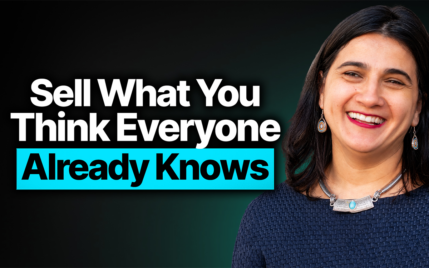
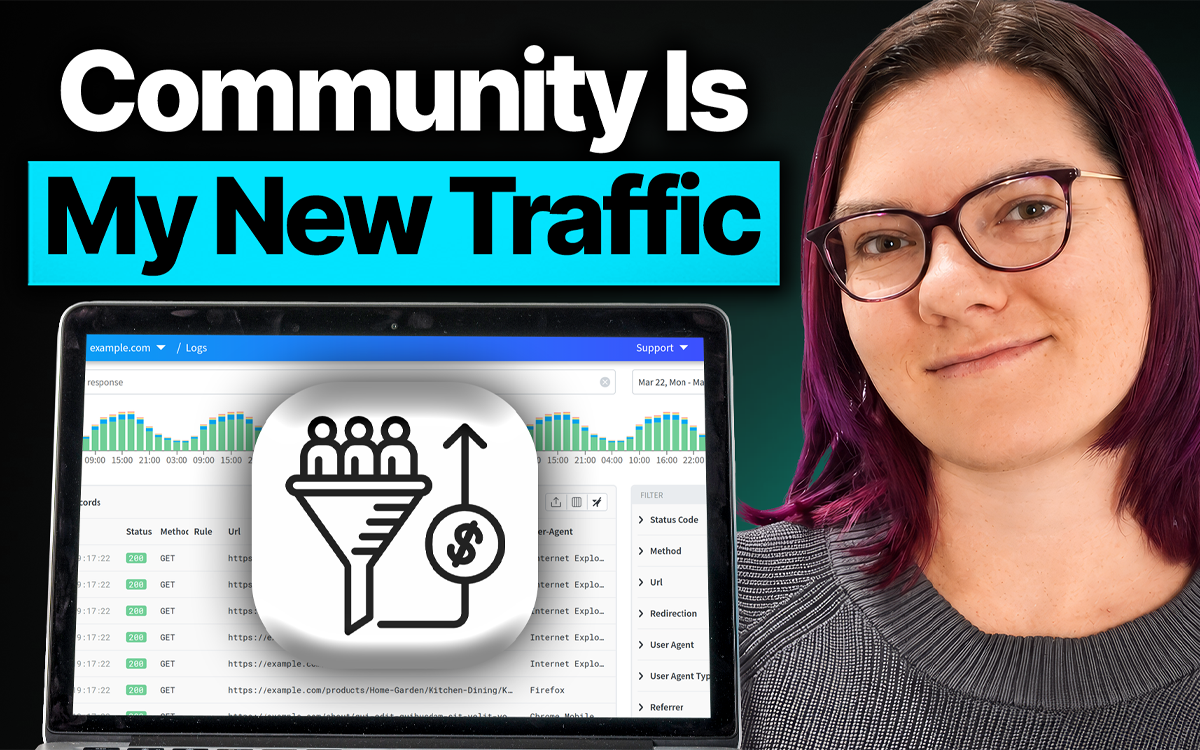
In this week’s episode of the Niche Pursuits podcast, Nina Clapperton and I discuss how content businesses can still grow after HCU, AI Overviews, and the decline of traffic-first blogging. Nina shares how she has continued building revenue through community, email, affiliate offers, products, and a more intentional approach to content.
Nina is the founder of She Knows SEO, and longtime listeners may remember her previous appearance on the podcast back in 2022. Since then, she has had multiple $100,000 months, reached a $150,000 month, and continued earning from sites even as the broader content industry has changed dramatically.
Watch the Full Episode
Reframing the Post-HCU Content Business
Nina made it clear that HCU didn't hit her in the way many publishers were. Her main travel site continued to perform well after the update, which she attributes largely to firsthand experience and content aligned with her expertise.
She did, however, see problems on a pet site where nearly all the content had been written by others. The only two posts that held up were the ones she had written herself, which gave her useful data points on content quality and direct experience.
She also shared a separate case where one of her travel sites dropped from around 180,000 pageviews to roughly 40,000 to 50,000 pageviews after she bought spammy backlinks as a test. That drop didn't line up with a public update, so her takeaway was that the backlinks likely played a role.
Some key numbers from Nina’s business:
- Her first travel blog reached 50,000 sessions in six months.
- She had her first $30,000 a month shortly after her first podcast appearance.
- She has had at least one $100,000 month each year for the last three years.
- Last year, she hit her first $150,000 a month.
- One old travel blog still earns about $5,000 per month from affiliate sales.
The bigger point isn't that everyone can copy her exact setup. It's that her business didn't depend on a single traffic source, a single site, or a single ad network.
Shifting From Traffic to Customer Journey
One of the most interesting parts of the interview was Nina’s view on KPIs. She isn't chasing pageviews in the same way many bloggers do.
For her, pageviews alone aren't the goal because they don't automatically translate into income. She looks more closely at how people move through her content, whether they return, and whether they eventually join her community, email list, or customer base.
She mentioned metrics such as:
- Pages per session
- Returning users
- Lifetime value of audience members
- Email subscribers
- Affiliate clicks
- Product sales
That shift matters because a traffic-first model naturally pushes creators toward ad revenue. Nina sees that as limiting, since ad RPMs often don't match the value of a well-served visitor who may buy a product, join a program, or use an affiliate link.
Her phrase was simple: pageviews do not pay the bills, money does.
Building Content Around Revenue Paths
Nina described her SEO sales funnel strategy as the core of how she thinks about content today. Each post should have a purpose, and every major content cluster should lead somewhere.
That “somewhere” could be a product, an affiliate offer, a freebie, an email signup, or a deeper piece of content. The key is that visitors aren't left at a dead end.
For example, she talked about creating a content cluster around internal linking. Rather than writing one article and calling it done, she maps out the full conversation someone might have as they learn the topic. That sequence may include:
- What internal linking means
- Why internal links matter
- How to use nofollow and dofollow links
- When to add links
- Which tools help
- How to set up LinkWhisper
- How to use the tool for affiliate income
This structure does more than help with SEO. It builds trust by showing people she uses the tools she recommends and can help them after they click.
Planning Content Before Publishing
Nina does most of her planning before she writes. She wants to know where the content is going, what offer it supports, and how the internal links should guide the visitor.
She said a silo should usually have at least 20 posts, while a topic cluster should have at least 10. Those numbers aren't meant to be universal rules, though they show how much thought she puts into the structure before publishing.
Her planning process includes:
- Choosing the main offer
- Mapping the related topic
- Listing the questions people ask
- Planning internal links
- Writing with the end point in mind
- Checking SERPs for missing angles
She also said every post should end with a suggestion for the next step. Her conclusions aren't just summaries; they are bridges to the next piece of the journey.
This is a big difference from the older model, where bloggers might publish a post, add ads, insert a few affiliate links, and move on.
Selling Without Hiding the Offer
A major theme from the interview was that many creators say they are selling, yet their offers are nearly impossible to find. Nina gave the example of a student whose course was barely visible on her website. There was no shop page, no clear menu link, and almost no obvious path for visitors to buy.
That is a common issue for bloggers who have spent years writing informational content. They may have products or affiliate offers, yet the site structure still behaves like a free resource library rather than a business.
Nina’s advice was to be much more intentional:

- Put offers where people can find them.
- Mention them more than once.
- Add value before asking for a sale.
- Use content to answer objections.
- Test placements and calls to action.
- Give visitors several ways to trust you first.
She also stressed that selling takes repetition. People may need to see an offer multiple times before buying, especially when trust in online shopping is low.
Testing Offers and Placements
Nina is a big believer in testing. She talked about using similar posts to compare affiliate link placement, images, headings, and calls to action.
This type of testing helped her learn what works for her audience. Over time, those experiments gave her better instincts about which offers fit which content. Her testing approach includes:
- Comparing similar posts
- Using UTM tracking
- Watching conversions
- Testing one to three changes at a time
- Letting experiments run for one to three months
- Treating failed tests as data
That last point is important. Nina doesn't seem to view a failed experiment as wasted effort, especially when it gives her more information about her audience. She even framed the backlink test that hurt one site as a data point. Painful, yes, yet still useful for future decision-making.
Creating for a Specific Person
Another theme was audience clarity. Nina doesn't define her audience by broad demographics such as “women aged 25 to 45.”
Instead, she thinks of one very specific person. She knows what that person wants, what they struggle with, and what kind of help they need next. That approach shapes:
- Topic selection
- Product creation
- Email content
- Sales copy
- Facebook group posts
- YouTube ideas
This also explains why community is so central to her strategy. By talking to people regularly, she gets a constant stream of questions, objections, and content ideas. Her rule is simple: when the same question comes up more than three times, it often becomes a blog post.
Expanding Beyond the Blog
Nina’s current content system goes far beyond traditional blogging. She uses TikTok, YouTube, Facebook groups, email, blog posts, podcasts, and communities in different ways.
What stood out is that she doesn't treat the blog as the only entry point. In one newer project, discovery started on TikTok, moved to a Facebook group, and then led people to email and deeper content.
She said one TikTok account quickly reached 500,000 views, while the related Facebook group grew to nearly 30,000 people before she had even started posting heavily there. That group also drove thousands of email subscribers. Her platform mix includes:
- TikTok for discovery
- Facebook groups for conversation
- Email for relationship building
- YouTube for deeper teaching
- Blog content for searchable answers
- Podcasts for audio learners
The blog still matters in her system. She treats written content as a searchable directory she can point people to again and again.
Using AI to Make Space for Human Work
Nina has used AI since 2021, long before it became common in the blogging world. Today, she uses AI heavily for formatting, repurposing, automation, and agent-based workflows.
What makes her approach interesting is that she doesn't use AI to remove her personality. She uses it to reduce the work that drains her energy, which gives her more room to add stories, case studies, examples, and community interaction. She mentioned using AI for:
- Formatting content
- Repurposing old videos
- Creating social content
- Organizing workflows
- Supporting assistants
- Running internal systems
Given her health constraints, this is a major part of how she continues to run a sizable business while working only about five to 10 hours per week. She also said she never wanted to become a manager of a huge team. AI helps her remain more of a creator, which is the role she enjoys most.
Focusing on Brand and Community
Nina’s view is that nameless, faceless brands will have a harder time going forward. People want to trust a person, not just a site full of optimized articles.
That is why she spends time in her Facebook group, goes on podcasts, builds freebies, teaches publicly, and creates content in multiple formats. All of those touchpoints help people associate her name with SEO, AI, blogging, and content strategy.
Community also gives her resilience. When Google changes, she still has email subscribers, Facebook group members, students, customers, YouTube viewers, and people who search for her brand directly. Her brand-building advice can be summed up this way:
- Let people see your expertise.
- Show up in more than one place.
- Build trust before the sale.
- Create offers that help.
- Keep listening to audience questions.
- Make your site easy to buy from.
This is the part of the interview that matters most for publishers struggling after HCU. Content still has value, yet it works better when it supports a broader business.
Final Thoughts
This episode with Nina Clapperton was a reminder that the content business isn't dead. The old traffic-first model is weaker than it used to be, yet content can still drive serious revenue when it is connected to community, email, products, and affiliate strategy.
Nina’s story shows the value of building a brand people remember. She isn't relying on a single post, keyword, or platform to carry the business. The big lesson is to stop treating content as the final product. Treat it as the path that brings people into your world, helps them solve problems, and points them toward the next useful step.
For bloggers and niche site owners, the shift may feel uncomfortable. Yet Nina’s results suggest there's still plenty of opportunity for creators willing to rethink their KPIs, talk to their audience, and build revenue paths that go beyond ads.
Links & Resources
- Learn more about She Knows SEO
- Get Nina's Free SEO Content Audit Checklist
- Subscribe to @sheknowsseo's YouTube channel
- Join the SEO for Bloggers' Facebook community
- Follow Nina on Instagram
- Follow Nina on Threads
- Check out She Knows SEO on Facebook
- Connect with Nina
Related Posts






Want to learn step-by-step how I built my Niche Site Empire up to a full-time income?
Yes! I Love to Learn
Learn How I Built My Niche Site Empire to a Full-time Income
- How to Pick the Right Keywords at the START, and avoid the losers
- How to Scale and Outsource 90% of the Work, Allowing Your Empire to GROW Without You
- How to Build a Site That Gets REAL TRAFFIC FROM GOOGLE (every. single. day.)
- Subscribe to the Niche Pursuits Newsletter delivered with value 3X per week
My top recommendations